


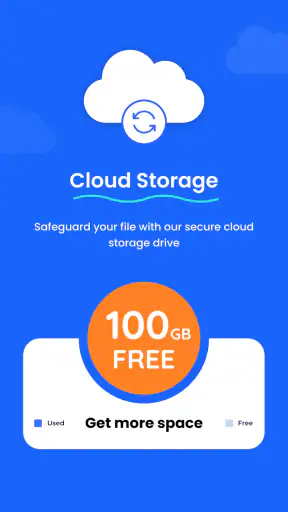
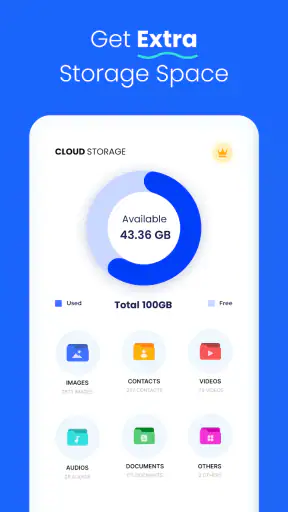
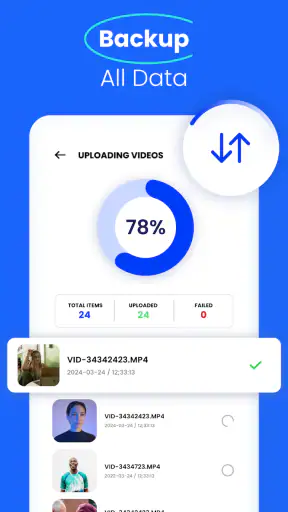

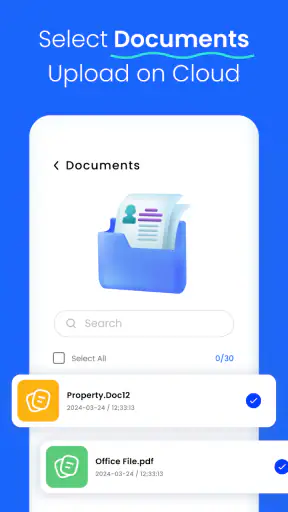
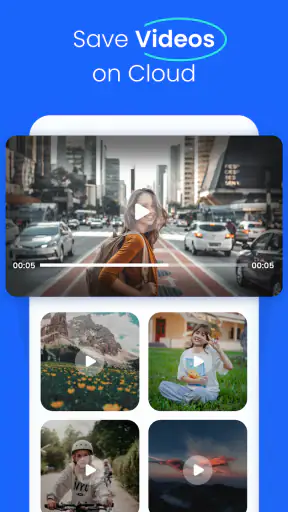

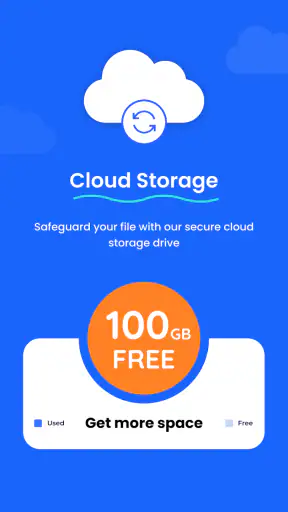
Cloud Storage: Cloud Drive App is the kind of productivity tool I would reach for when my phone is becoming the only place where important contacts and photos live. It is free to install, aimed at Everyone, and developed by Fazcon Apps. After spending time with it, I see its main appeal in a simple idea: keep personal information in a cloud-based space rather than relying entirely on the phone in your hand.
That idea sounds straightforward, but the quality of the experience depends heavily on connectivity. This is not an app I would judge only by how quickly it opens or how tidy its screens look. The important question is whether it fits the moments when I need to reach contacts or photos while moving between Wi-Fi and mobile data. My overall impression is positive for people who want a focused storage companion, although I would not treat it as a complete replacement for every backup and file-management tool.
How Cloud Storage: Cloud Drive App feels in everyday use
The app sits in the productivity category, but its practical role is closer to a personal safety net. I can imagine using it before changing phones, while organizing a large photo collection, or when I want a second place for contact information. The store summary points to cloud space for contacts and photos, so that focus matters: this is more specialized than a general-purpose workspace filled with documents, spreadsheets, and team controls.
That narrower purpose is one of its strengths. A person who mainly wants to protect memories and keep address-book information available does not necessarily need a complicated business platform. The interface can be approached with a clear question: what personal information do I want to store, and when might I need to retrieve it? That makes the app easier to understand than services designed around collaboration or office files.
At the same time, I would avoid assuming that a cloud label automatically means every item is always available. The experience naturally depends on the connection used to send information to the service and to retrieve it later. If I were setting it up, I would do the first organization while connected to reliable Wi-Fi, then check that the information I care about is visible from the app before considering the job finished.
The app is free, which lowers the barrier to trying it. It also includes optional in-app purchases ranging from $2.99 to $215.99 per item, so I would look carefully at the upgrade choices before committing to a storage-heavy workflow. The free starting point is useful for evaluating the interface and deciding whether the service matches my habits, but the possible cost range means I would not assume that every long-term storage need is covered without payment.
Connectivity is part of the workflow, not a background detail
Cloud storage feels effortless when the network is stable. I select the contacts or photos I want to preserve, wait for the transfer to finish, and move on. In a strong Wi-Fi environment, that process is easy to overlook because the app becomes a quiet part of my routine. The trouble appears when I start the same task in a basement, on a crowded train, or in a building with inconsistent reception.
For that reason, I would not begin a large photo task immediately before leaving home. I would first connect to dependable Wi-Fi, allow the transfer to complete, and then open the stored content again. That second check is a small but valuable habit because it separates “I selected these items” from “these items are actually available in the cloud.” It also prevents me from discovering a half-finished process only when the original phone is no longer convenient to use.
Mobile data changes the decision. A few contacts may be a light task, while a sizeable photo selection can consume more data and take longer. The app’s purpose makes it tempting to send everything at once, but I think a staged approach is more sensible: start with irreplaceable photos, confirm the result, and continue in smaller groups. This gives me clearer feedback and makes a weak connection less frustrating.
There is also a difference between storing something and being able to use it comfortably at the exact moment I want it. A cloud service can be valuable as a remote copy, but it is not the same as having a local gallery or contact list ready without a network. I would therefore keep the information I need during travel or emergencies accessible through the phone’s normal tools, while using this app as an additional place for protection and retrieval.
Useful mobile situations, and where the convenience stops
The most convincing use case for me is a phone transition. Before moving to another device, I could use the app to gather important contacts and selected photos in one cloud-focused location. That does not remove the need to check the new phone afterward, but it gives me another route to information that might otherwise be tied to the old handset.
A second scenario is a family event. I might take many photos during a birthday or a short trip, then preserve the best ones later when I am back on Wi-Fi. The app is more useful here as part of a deliberate routine than as an automatic reflex. I would avoid trying to upload a large batch while walking around with a weak signal, especially if I need the phone for navigation or communication at the same time.
It can also help someone who changes phones more often than they would like. Contacts are particularly important because losing one address or number can be more disruptive than losing a casual snapshot. I would use a simple priority order: save essential contacts first, then handle photos. This gives the most practical information attention before storage activity becomes time-consuming.
Still, I would skip this app as my main choice if I need a full document system, shared folders for a team, detailed file permissions, or a unified home for many file types. Its stated focus is contacts and photos, and I think it is better to respect that focus than force it into a role intended for a broad cloud drive. Someone already comfortable with a mature general storage service may prefer staying in one ecosystem instead of adding a separate app.
The mobile experience also raises a privacy-minded practical question: do I really want every photo in the cloud, or only selected material? My answer would usually be selective storage. Family records, travel photos, scanned personal documents, and images that would be difficult to recreate deserve priority. Temporary screenshots, duplicate downloads, and blurred pictures can be left out, reducing both upload time and future clutter.
What happens when a transfer is interrupted
Network-dependent tasks need a recovery plan. If the connection drops while I am storing photos, I would not immediately repeat the entire selection. First, I would reconnect, reopen the relevant area, and check which items are already present. Only then would I attempt the remaining group. This avoids unnecessary duplicate work and limits the amount of data sent over a second attempt.
I would also treat a successful-looking screen as a prompt to verify, not as the final proof. A practical check is to close and reopen the app after the connection is stable, then inspect a few recently stored items. For contacts, I would check several entries with different details rather than looking at only one. For photos, I would open an image from the beginning, middle, and end of a batch if the selection was large.
That approach matters because cloud workflows have two separate points of failure: the upload itself and the later retrieval. A photo can appear selected but not finish transferring, or it can be stored while a poor connection makes it difficult to view immediately. Thinking in those two stages makes the app more reliable in practice, even though it adds a little discipline to the process.
I would be especially careful before deleting anything from the phone. Cloud storage should not become an excuse to erase the original immediately. I would keep the local copies until I had confirmed that the stored versions open correctly and that the contacts I need can be reached when using the app. Only after that check would I consider freeing space on the device.
This cautious workflow is one of the less obvious lessons of using a connectivity-dependent storage app: recovery is easier when the original information still exists. If I wait until after a phone reset, a damaged device, or an account problem, I have fewer ways to investigate what happened. The app is most helpful when I use it proactively rather than as a last-second rescue tool.
Using it without wasting mobile data or cloud space
My preferred routine would be to sort first and upload second. I would remove obvious duplicates, choose the photos that matter, and group them by a simple purpose such as a trip or family occasion. This is not just tidiness. Smaller, intentional batches are easier to verify, easier to repeat after a network interruption, and less likely to fill available storage with material I will never revisit.
When Wi-Fi is available, I would use it for the heavier work. Mobile data is more suitable for urgent contact storage or a small number of essential photos. If I had to use cellular connectivity, I would watch the phone’s data settings and avoid starting a broad photo transfer in the background of a busy day. The cost is not only data usage; a long transfer can also make the phone less convenient for other tasks.
The optional purchase range makes planning even more important. I would not upgrade simply because the app presents more space as an attractive solution. First I would estimate how much of my collection is genuinely worth storing, then decide whether the paid option fits that need. If my goal is only a modest emergency copy, a smaller commitment may be more sensible than paying for room that encourages uncontrolled accumulation.
Another useful habit is to keep a small record of what I have stored. It could be as simple as noting the month and event represented by a batch. That helps me recognize gaps later, especially if I do not use the app every week. A cloud archive becomes more useful when I can understand its contents instead of treating it as an unexplained pile of uploads.
I would also avoid confusing cloud storage with a complete organization system. If I want detailed albums, editing tools, shared family workflows, or extensive document search, a dedicated photo service or broader drive may be more comfortable. This app makes more sense when the priority is having a separate cloud location for contacts and photos, not when I expect it to replace every tool on my phone.
Who should try it, and who should look elsewhere
Cloud Storage: Cloud Drive App is a reasonable fit for someone who wants a straightforward cloud option for personal contacts and photos and does not want to begin with a complicated productivity suite. It is also approachable for people who are preparing for a phone change and want an additional place to keep important information. The Everyone content rating makes it suitable for a broad audience, while the free entry point makes testing the basic workflow less intimidating.
I would recommend it most to users who are willing to manage uploads thoughtfully. The best results come from reliable Wi-Fi, selective batches, and a final verification step. Someone who expects a single tap to silently protect an entire digital life may find the process less reassuring, particularly when the connection is unstable or when the collection is large.
I would look at the usual alternatives if I already rely on a platform that combines device backup, photo organization, contacts, documents, and account recovery in one place. A broader service may reduce the number of apps I need and make switching between devices more seamless. On the other hand, that broader approach can feel excessive for a person who only wants a focused storage destination, which is where Fazcon Apps’ narrower concept remains appealing.
The app has reached a substantial audience, with over five million installs, and its average rating is 4.2 from around fifteen thousand ratings. Those figures suggest that many people find the basic idea useful, but they do not remove the need to test it against my own connection, storage habits, and expectations. A popular app can still be the wrong match for someone who needs offline access or advanced file-management controls.
The current release is version 1.9.0, and the app supports Android 7.0 and later. That makes it relevant to people using older Android devices as well as newer phones, although I would still check how comfortably it runs on my particular handset before making it central to a backup routine. Compatibility is only the starting point; the real test is whether transfers and retrieval fit my daily network conditions.
My final view on a connection-first storage tool
I like the clear purpose here. Instead of presenting itself as an all-purpose digital office, Cloud Storage: Cloud Drive App concentrates attention on contacts and photos, two types of personal information that are easy to overlook until a phone is lost, replaced, or damaged. That focus makes it approachable, especially for someone who wants a separate cloud copy without learning a large collection of professional features.
My reservation is equally clear: the app should be used with realistic expectations about connectivity. I would not depend on it as the only place for information I need during a journey, nor would I delete local copies before checking the cloud versions. Stable Wi-Fi, smaller batches, and deliberate verification turn the service from a vague promise into a practical routine.
For me, the best way to use it is as a second layer rather than a complete replacement for the phone’s normal contacts and photo tools. Store the irreplaceable material, confirm that it can be retrieved, keep an eye on data and paid storage choices, and use a broader alternative when documents, collaboration, or richer organization are the priority. Its real value appears when cloud access is treated as a planned backup habit, not as a substitute for every offline need.
That makes it worth trying for Android users who want focused cloud storage and are comfortable working around network limitations. I would recommend starting with a small, meaningful group of contacts and photos, testing the full upload-and-retrieve cycle, and then deciding whether the app deserves a larger role in the way I protect personal information.


